

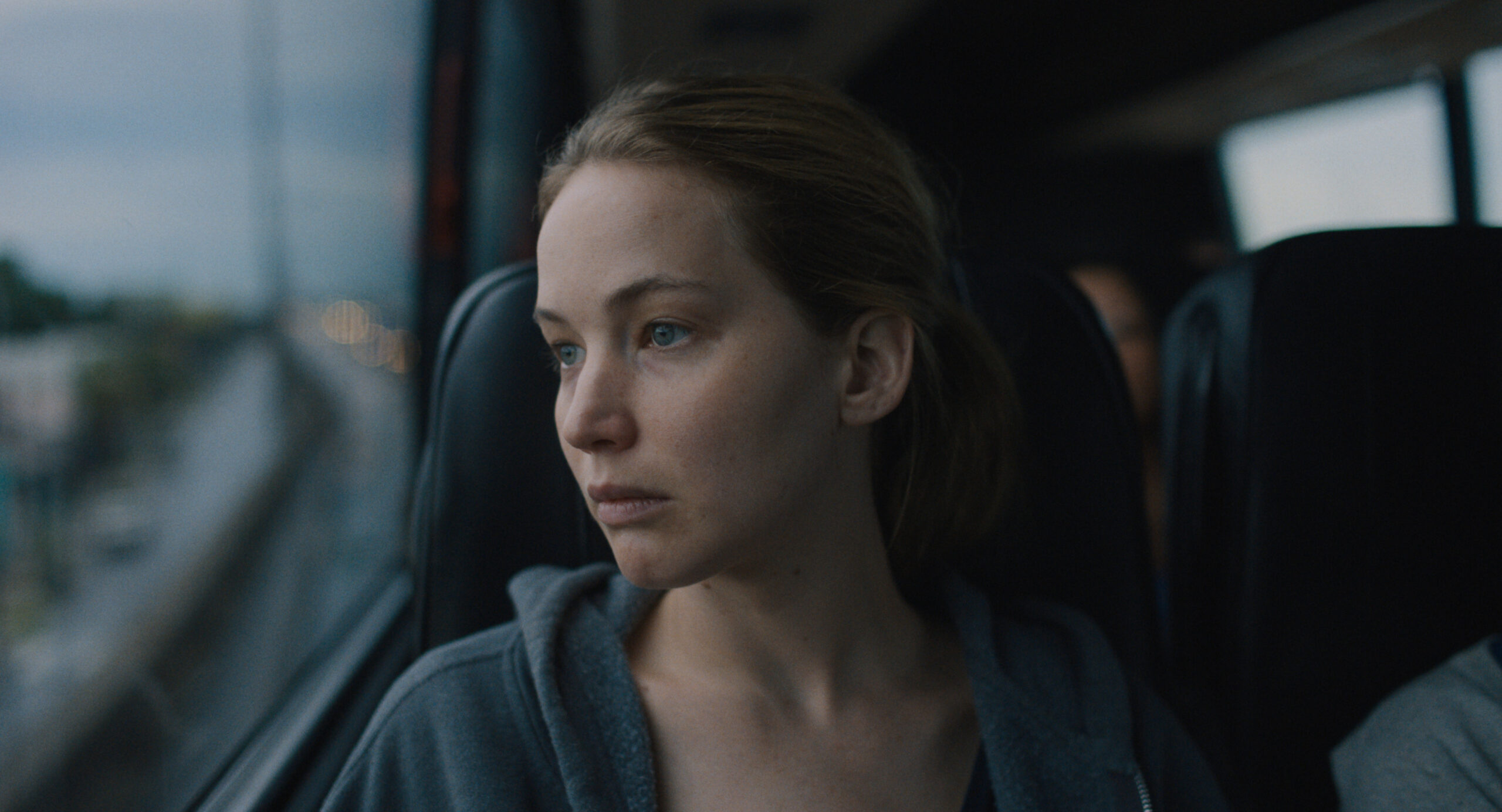
Jennifer Lawrence, Brian Tyree Henry, and Lila Neugebauer convened on a round table to talk about Causeway, the 2022 drama that’s as much about silence as it is about words—a film that’s left an indelible mark on audiences and earned Henry an Oscar nomination for Best Supporting Actor. Moderated by Vanity Fair’s Jazz Tangcay, with questions from critics like Lauren Bradshaw and AMFM Magazine’s Paul Salfen, the conversation crackled with the trio’s chemistry, a testament to the bond they forged through the trials of making a film in a city, and a world, shaped by resilience.
Causeway, directed by Neugebauer in her feature debut and written by Ottessa Moshfegh, Luke Goebel, and Elizabeth Sanders, is a quiet marvel. Produced by Lawrence and Justine Ciarrocchi, it follows Lynsey (Lawrence), a soldier returning to New Orleans after a traumatic brain injury from an IED explosion in Afghanistan. Struggling to reclaim her life, she forms an unlikely friendship with James (Henry), a mechanic haunted by a car crash that killed his nephew. With a supporting cast of Linda Emond, Jayne Houdyshell, Stephen McKinley Henderson, and Russell Harvard, the film, which premiered at the 47th Toronto International Film Festival and hit Apple TV+ and select theaters in late 2022, is a study in restraint—its power lies in the spaces between words, the glances that say what dialogue cannot.
The conversation kicks off with a question from Tangcay, “Jennifer, you’re not just starring in Causeway—you’re a producer. What made this story one you had to tell?”
Lawrence’s eyes light up, her hands gesturing animatedly. “It was the rhythm of the script, this slow, deliberate melody. I don’t see that often. Even though I’m not a service member, I connected to Lynsey’s need to move, to escape anxiety or depression through action. She’s searching for safety within herself, even if it means going back to the place where she was hurt—Afghanistan. That hit me hard. And when I met Lila, I knew she’d get it. She sees people, really sees them, and that’s what this film needed.”
Henry jumps in, his voice rich with admiration. “For me, it was these two.” He points to Lawrence and Neugebauer, grinning. “I’ve been a fan of Jen’s forever—her fearlessness, her rawness. Seeing her return to this kind of indie storytelling? I was in. And Lila—I’ve known her since we were kids, sharing this love for theater, for stories that cut deep. When she asked me to do this, it was a no-brainer. Then I read the script, and it was so simple, like a play. No big climaxes, just two people trying to connect. That simplicity scared me, but it also hooked me.”
Neugebauer, nodded . “The script, by Ottessa, Luke, and Elizabeth, was like a poem—sparse but heavy with truth. It’s about Lynsey and James, two survivors, figuring out how to stay in the world. Jen and Brian brought that to life with such honesty. Their chemistry was the heartbeat.”
Tangcay leans forward, intrigued. “That chemistry between Lynsey and James is everything. How did you build it?”
Henry laughs, his eyes crinkling. “New Orleans, man. Hot, sticky, miserable New Orleans. Jen and I were together all the time, just talking—about life, the script, everything. She’s not some distant star; she’s in the trenches, calling you out, keeping it real. That let us build this friendship between James and Lynsey, two people who see each other’s pain and don’t run. It’s messy, it’s beautiful.”
Lawrence smiles, her voice soft. “Brian’s just… he’s a beautiful person. We clicked right away, and it spilled onto the screen. Lila gave us so much space to just be. There’s this scene in a car where we’re talking about nothing and everything, and it felt so real because that’s how we were. The pandemic break helped, too. We came back closer, and we chased that connection, that first step toward healing.”
Neugebauer chuckles, a glint of mischief in her eyes. “I call it the ‘Leila Squad.’ I’d be right there with them, sometimes inches away, making sure we caught the intimacy. My theater background helped—I’m used to giving actors room to discover. Jen and Brian trusted me, and that let us dig into the truth of every moment.”
Bradshaw, from the Critics Choice Association’s Women’s Committee, chimes in with a question about the film’s Sophie seal, which honors stories that illuminate the female experience. “What does it mean to you to be recognized for telling Lynsey’s story, especially as a female veteran?”
Lawrence’s face softens, her voice earnest. “It’s a huge honor. Making people feel seen, especially women and veterans who are so often overlooked, is why I do this. Lynsey’s story isn’t just about being a soldier—it’s about being human, rebuilding yourself. That recognition means we got it right.”
Neugebauer nods. “It’s humbling. We wanted to tell a story that was specific but universal, to honor a female veteran’s experience with care. The Sophie seal feels like a nod to that.”
Tangcay shifts gears, her tone curious. “Lila, you came from theater to direct this film. How did that shape your approach?”
Neugebauer sets down her coffee, her hands folding neatly. “Theater and film are opposites in structure—time, process, all of it. But at their core, they’re about storytelling through people. My work with new plays taught me how to collaborate with actors, to weave visuals into emotional truth. Directing Causeway felt intuitive because it was about those conversations with Jen and Brian, about finding the heart of each scene. The script’s development felt like shaping a play—challenging but exhilarating.”
Henry leans in, his voice warm. “Lila’s like a textile artist. She gets in there, sorts through the threads, finds what’s true. She’d be right next to us, not letting us move on until we nailed the scene’s needs and wants. That’s rare. It made me feel so connected to James.”
Salfen, from AMFM Magazine, asks the group about their performances. “To give such raw, powerful performances, what keeps you focused, on the right path to be your best?”
Henry grins, glancing at Lawrence. “The director and my co-star. It’s all about connection. Acting’s like being an emotional athlete—you dive into these lives, take after take, and it’s exhausting. But when you’re with people like Jen and Lila, who create a safe space to be messy, to be real, it’s worth it. That connection is what you feel on screen, what leaves an impression.”
Lawrence nods, her voice quiet but firm. “It’s true. It’s about the people you’re with. Brian and Lila made it possible to go to those vulnerable places. You can’t do that alone.”
Tangcay brings up the production’s challenges—pandemic delays, flash floods, evacuations. “How did those shape the film?”
Henry’s eyes light up with the memory. “New Orleans is the most resilient place I’ve ever seen. Tropical storms, evacuations—we were at the mercy of the land. But the people there, they bunker down, protect what’s theirs. That spirit became part of James and Lynsey, who are fighting to stay, to rebuild. The pandemic break changed us. We came back in 2021 different—more vulnerable, more aware of loss. It shifted the story from a quest for home to a fight to stay home.”
Lawrence picks up the thread, her voice steady. “The break was brutal, but it was a gift. As an indie film, we had the freedom to listen to the story, to see what it needed. Brian and I came back closer, and we realized it wasn’t about Lynsey leaving for Afghanistan—it was about her choosing to stay, to heal through her friendship with James. We were all survivors by then, and that shaped everything.”
Neugebauer nods, her expression thoughtful. “The challenges forced us to be instinctual. We’d watch footage, talk, adjust. The pandemic gave us perspective—global trauma, loneliness—and we leaned into that, making the film about connection as survival. New Orleans, with its scars and strength, was our guide.”
As the conversation winds down, Tangcay asks what they hope audiences take away. Henry’s voice is soft but firm. “That connection is possible, even when you’re broken. James and Lynsey don’t fix each other—they give each other a reason to keep going. I want people to feel that possibility.”
Lawrence smiles, her eyes bright. “I hope people feel seen, whether they’ve survived trauma or just felt lost. It’s about those small moments of connection that make life bearable, that first step of choosing to stay.”
Neugebauer leans forward, her voice steady. “Hope—not the shiny kind, but the real kind. The kind that comes from knowing you’re not alone, even in your darkest moments.”
The trio swapped stories about New Orleans’ relentless heat and a stray cat that vanished from a set house during the pandemic—a small, aching reminder of how much changed. Causeway is a film born of resilience, its story and its making intertwined with the courage to stay, to connect, to rebuild. For Lawrence, Henry, and Neugebauer, it’s a shared journey that’s left them changed. For audiences, it’s a quiet, unforgettable call to find hope in the spaces between.
Causeway is now streaming on Apple TV+
