

Interview by Paul Salfen
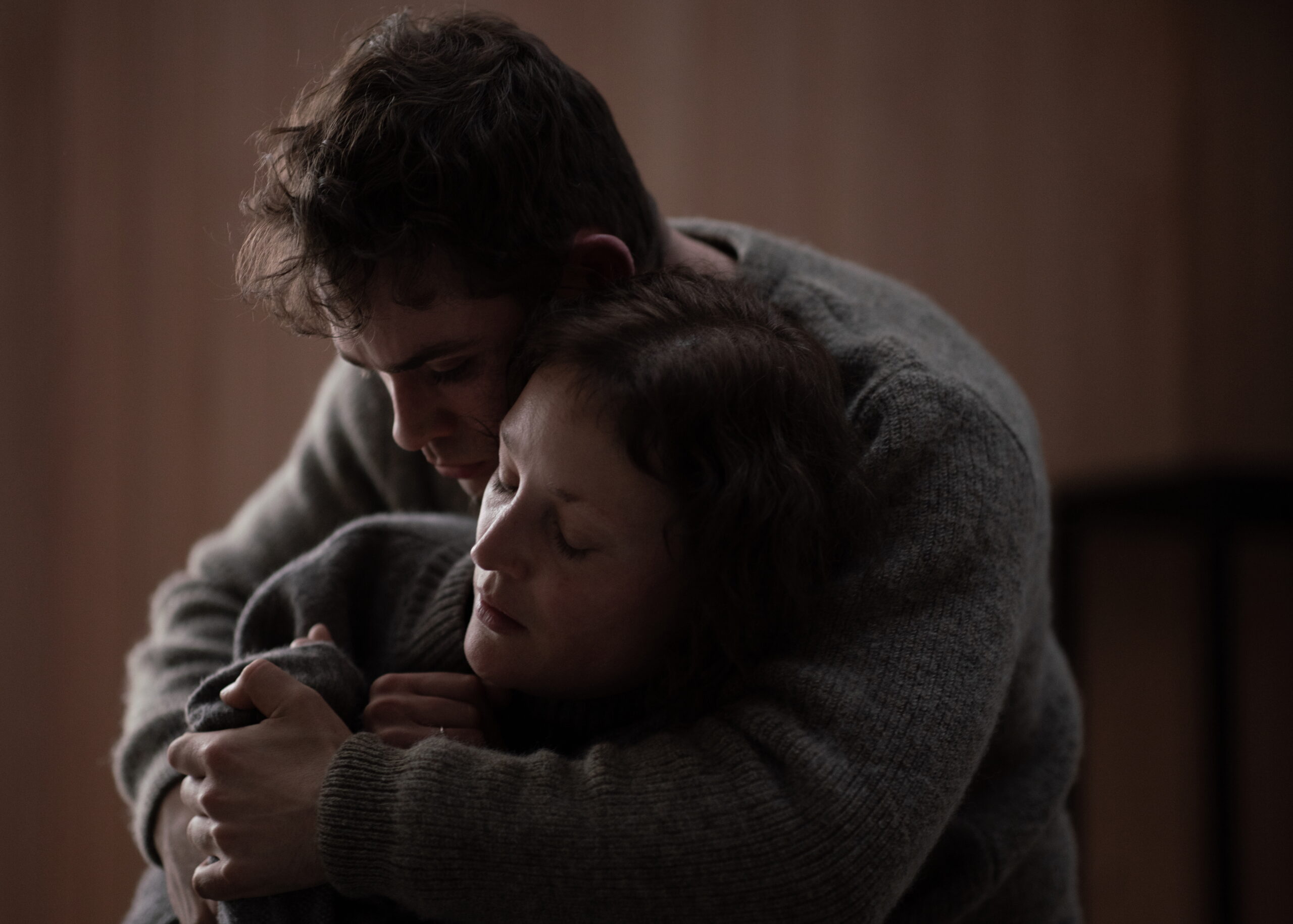
In the misty, brooding landscapes of New Zealand’s South Island, Went Up the Hill emerges as a chilling exploration of loss, legacy, and the lingering shadows of the past. Directed by Samuel Van Grinsven, this intimate ghost story stars Vicky Krieps (Phantom Thread, Corsage) as Jill, the widow of the deceased Elizabeth, whose spirit refuses to rest. Opposite her is Dacre Montgomery (Stranger Things) as Jack, Elizabeth’s estranged son, drawn back into a web of familial hauntings. What begins as a quest for closure spirals into a psychological battle for freedom, blending supernatural dread with raw emotional truth.
AMFM Magazine caught up with Krieps for an exclusive conversation about the film’s profound themes, the physical and mental challenges of her role, and the personal “ghosts” we all carry. Krieps, known for her selective and transformative performances, opens up about why this project felt essential—and how it pushed her to new limits.
 Film Synopsis
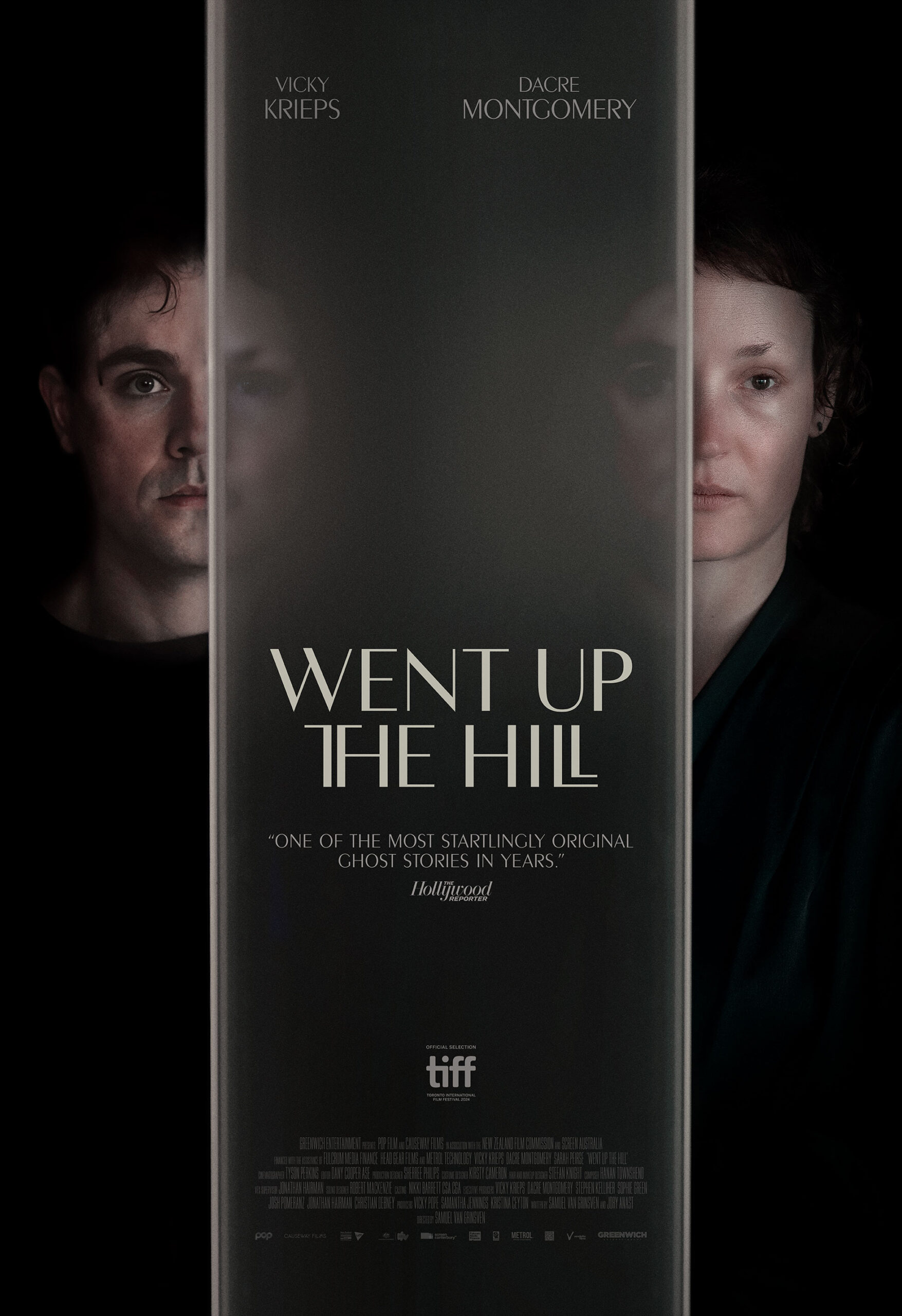
Abandoned as a child, Jack (Dacre Montgomery, Stranger Things) travels to remote New Zealand for the funeral of his estranged mother, Elizabeth. There, he meets her widow, Jill (Vicky Krieps, Phantom Thread, Corsage), and over the nights that follow, Elizabeth’s spirit begins to possess them in turn. What starts as a search for closure soon unearths deeper wounds. Bound by grief and haunted by what remains, Jack and Jill must break free from Elizabeth’s grasp before she pushes them to the edge. Set against the deeply atmospheric backdrop of New Zealand’s South Island, Went Up the Hill is an intimate, modern ghost story from Samuel Van Grinsven that explores the legacy of loss and the struggle to let go.
A Conversation with Vicky Krieps
PS: We are so honored to have you on with us, because this film is just so fantastic. And what an incredible role. When you get something like this, you just think, “I have to do this,” right?
VK: Yes. You said that this is something I thought I have… Oh, yeah. So I want you to read it. It’s just so good and so well written. I mean, you know, such a good… Yes. Right, exactly. And that I love the idea that we had two people and we are playing three people.
PS: And those challenges are kind of what keeps things interesting for you, right? Because at this point it feels like you’ve done so much.
VK: Yes, exactly. It was like another challenge to me to be able to tell a whole world, you know, in another character just between two people and all you have is the face of a person to understand the change and to tell, you know, the scariness or whatever you want to.
PS: And of course, you come from a great background and you’re very careful with the roles that you choose. What was it about this that made you just think, “Well, I really do need to do this one”?
VK: Because to me, you know, I didn’t read it only as a scary movie, but I read it more as a psychological analysis of people because, you know, we walk around as a person, but attached to us is all our past, you know, and we have all these ghosts in whatever form. But we have ghosts of people who might have left us, but we also have ghosts of relationships we had or things that happened to us and that, you know, so we keep carrying these things and we very suddenly take time to get rid of them, you know, to really tidy up the emotion.
PS: Absolutely. Is there a particular scene that stood out to you because there’s so many intense scenes? Is there one that stood out to you that you think you’ll always remember?
VK: There were many. But I think because of the whole ice, I will never forget spending a whole day on the ice and then sliding into the water and coming back out and being half frozen, and because it was so cold. And then we had neoprene under the clothes of course. But that was so exhausting. I really felt my whole body was—every muscle of my body was aching for three days.
PS: Well, you’ve been doing so many great roles, and people look up to what you do and they think, “See, I’d like to do that.” What kind of advice would you give to those other actors that they want to follow in your footsteps?
VK: Switch off the phone. Get off Instagram. Don’t compare yourself. And just do what you want to do.
PS: Yeah. I said, you know, my co-host caught in the American football, the Hail Mary. And we talk about that moment in your life or your career where you just kind of have to go for it and it works out for you. What do you suppose that was for you so far? And this may be one of them?
VK: I think this moment was a moment that was really outside of the eye of anybody. And it was before Phantom Thread even, and it was a different kind of moment, but I think it did the same, and it was me realizing I came out of an audition and I was standing with my accordion, and I had used it for the audition, and I knew that I wouldn’t get the role because I wasn’t famous enough. And, you know, it’s kept happening to me. So I was, you know, back at where I am and standing, waiting on the bus and next to me were, you know, sex workers. And they were also standing there. And I thought, well, I’m just actually standing here waiting for someone to pick me up. And I dropped that. I really suddenly realized that. And I just dropped it. And I decided that I would be the greatest artist I could ever be just by being, you know, not because someone sees me or picks me up, but I decided then and there that I would already be the biggest self, even if no one would ever pick me up, if that makes sense. And something shifted in my energy then.
PS: Absolutely. This movie is fantastic and I think people will get something different out of it depending on what they’ve been through in their lives. So what are you hoping that people will think about or talk about or take away here?
VK: Well, like I said, the internal work, you know, that we all need to… it has sometimes it has to be a fight even to life and death. If you want to free yourself from your past and your ghosts and live as a truly independent self-determined person.
PS: Absolutely. Well, thank you so much for being with us and look forward to talking to you again very, very soon. We’ll tell everyone to check out this film. It’s wonderful.
VK: Thank you. Thank you.
Krieps’ insights reveal Went Up the Hill as more than a ghost story—it’s a mirror to our own unresolved histories. Her commitment to authenticity, from braving freezing waters to embracing roles that demand emotional excavation, underscores why she’s one of cinema’s most compelling voices today. As audiences confront their own “ghosts,” this film promises to linger long after the credits roll. Catch Went Up the Hill in theaters and let it haunt you—in the best way possible.
