

Interview by Paul Salfen
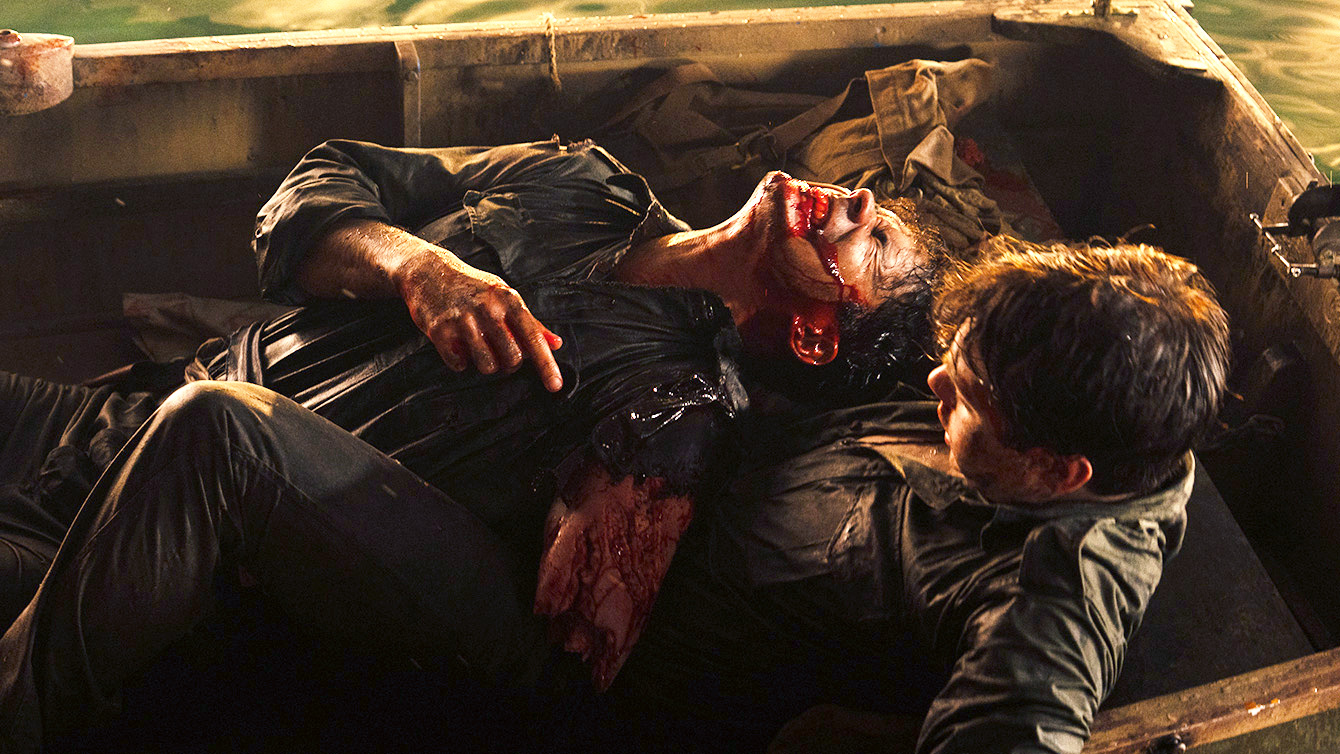
The Timor Sea stretches endlessly, a merciless expanse of blue under a scorching sun. A life raft drifts, overcrowded with Australian soldiers—young, battered, and far from home. Their ship, sunk by Japanese Zeros in 1942, has left them stranded, facing not only enemy fire but a primal terror circling beneath the waves. This is the harrowing world of Beast of War, the latest genre-blending triumph from Australian writer-director Kiah Roache-Turner, a filmmaker who thrives on crafting visceral, human stories in the chaos of war and horror.
Speaking via Zoom for a Fantastic Fest interview, Roache-Turner’s enthusiasm is infectious, even as he laments missing the festival in person. “I love Fantastic Fest so much,” he says, his voice tinged with longing. “I so wish I could come, but I’m wrapped up trying to develop the next one.” That next project? Another World War II epic, this time set on the Eastern Front with Russian snipers. “I just can’t get out of that world,” he laughs, admitting his obsession with the era’s raw, untold stories.
Beasts of War draws loose inspiration from the real-life sinking of the HMAS Armidale in 1942, where Australian soldiers faced shark-infested waters after their ship was attacked. “Hundreds of soldiers went into the ocean, and a lot of them got eaten by sharks,” Roache-Turner explains. While not a direct retelling, the film channels the visceral horror of that event, echoing the chilling USS Indianapolis story from Jaws. “The importance of what you were doing really resonated with the actors and definitely at the writing stage,” he says, noting how the historical weight elevated the film beyond a simple “shark munching people movie.”
At its core, Beasts of War is about survival and the bonds that hold men together under unimaginable pressure. Roache-Turner infuses the story with personal significance, drawing on his grandfather, a charismatic teacher-turned-soldier who died in World War II in New Guinea. “I was reading his letters to get some inspiration for what kind of man he was,” he shares. The film’s lead, Leo, played by Mark Goldsmith, embodies that spirit—a trusted leader navigating “death from above and death from below.” Roache-Turner explores the concept of “mateship,” a sacred Australian value, delving into both the strength and toxicity of wartime brotherhood. “I grew up with brothers and went to an all-boys school,” he says with a chuckle. “I know that world distressingly well.”
Filming Beasts of War was a logistical nightmare, with a grueling pre-production phase. “It was so difficult and stressful,” Roache-Turner admits. But once on set, the mood shifted. “It’s boys with toys in soldier uniforms,” he says, grinning. “Actors want to play soldiers, and directors want to do a war film. We were pigs in mud.” The result is a visually stunning film, with shots Roache-Turner calls “amazing,” capturing the terror and beauty of the open sea.
For aspiring filmmakers, Roache-Turner’s advice is simple yet profound: “You just gotta dive in and do it.” At 46, with five films under his belt, he still feels like a newcomer, marveling that others might look up to him. His career-defining moment came with the Canon 5D Mark II, an affordable camera that mimicked 35mm film. “There’s no excuse now,” he recalls thinking. “If you don’t make a feature film now, you’re just a coward.” That mindset birthed Wyrmwood, a self-financed zombie-road movie made with his brother, echoing the DIY spirit of Sam Raimi’s Evil Dead or Robert Rodriguez’s El Mariachi.
With Beast of War, Roache-Turner returns to that unfiltered vision, collaborating with a producer who supports his creative freedom. “This is all me,” he says proudly, describing a film that’s both a thrilling war drama and a primal monster movie. As Fantastic Fest audiences experience its remote premiere, Roache-Turner is already eyeing his next project, teasing a film featuring a female sniper based on a historical figure. “I love people in uniform, shooting guns,” he says with a grin. “It’s one of my favorite genres.”
Beast of War is more than a tale of sharks and strafing runs—it’s a testament to Roache-Turner’s ability to find humanity in horror. As the soldiers cling to their shrinking raft, their bonds, forged in the crucible of war, remind us of the resilience of the human spirit, even when the jaws of death are closing in.
